This installation is rooted in my lived experience in displacement, in healing, in reclaiming belonging.
This is more than an art piece.
This is my story.
Immigration
✳︎
Art
✳︎
Spirit
✳︎
Immigration ✳︎ Art ✳︎ Spirit ✳︎
2026
“God Wants to Play”
An Immersive Spiral Experience by Maira Peralta
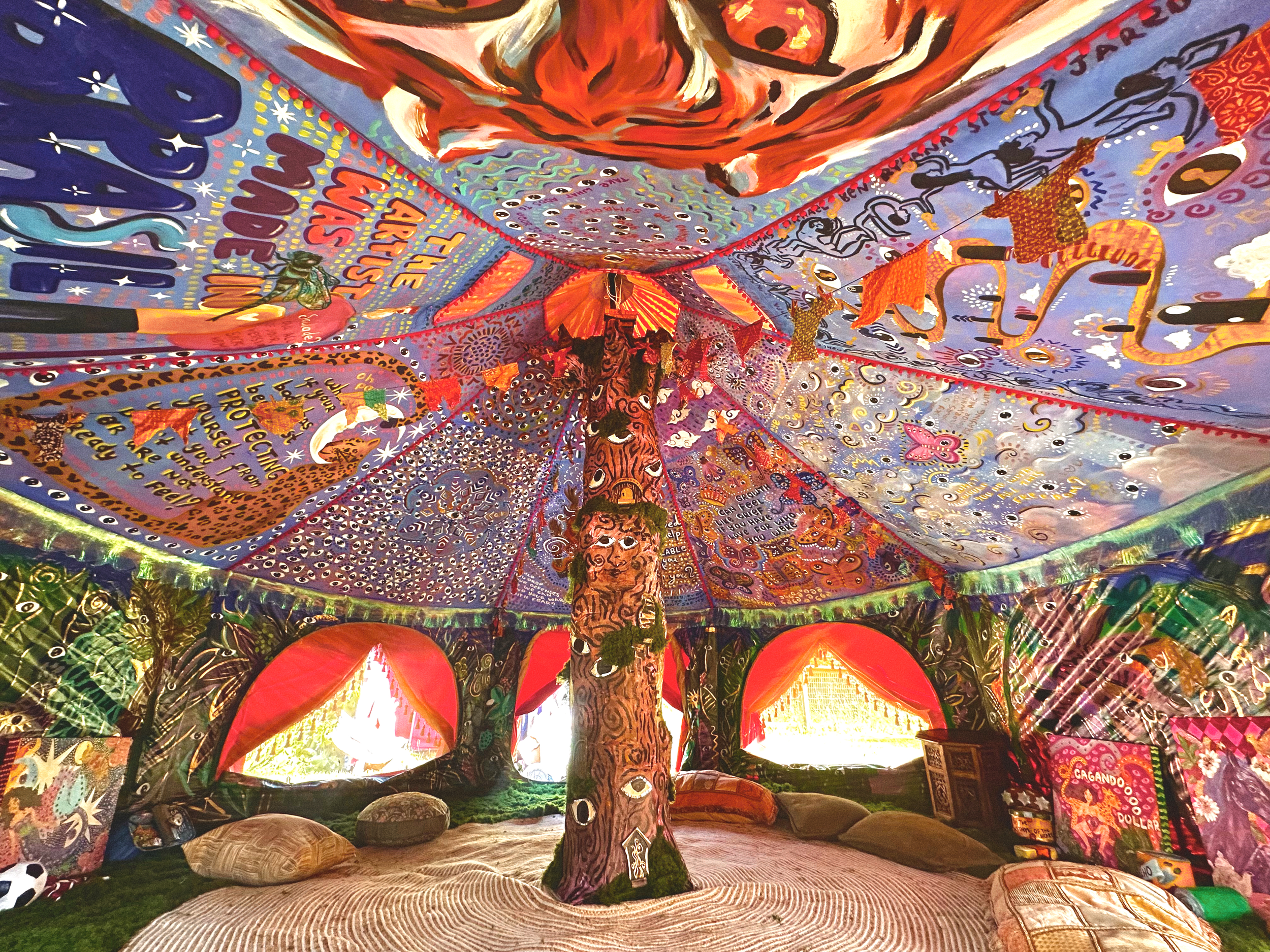
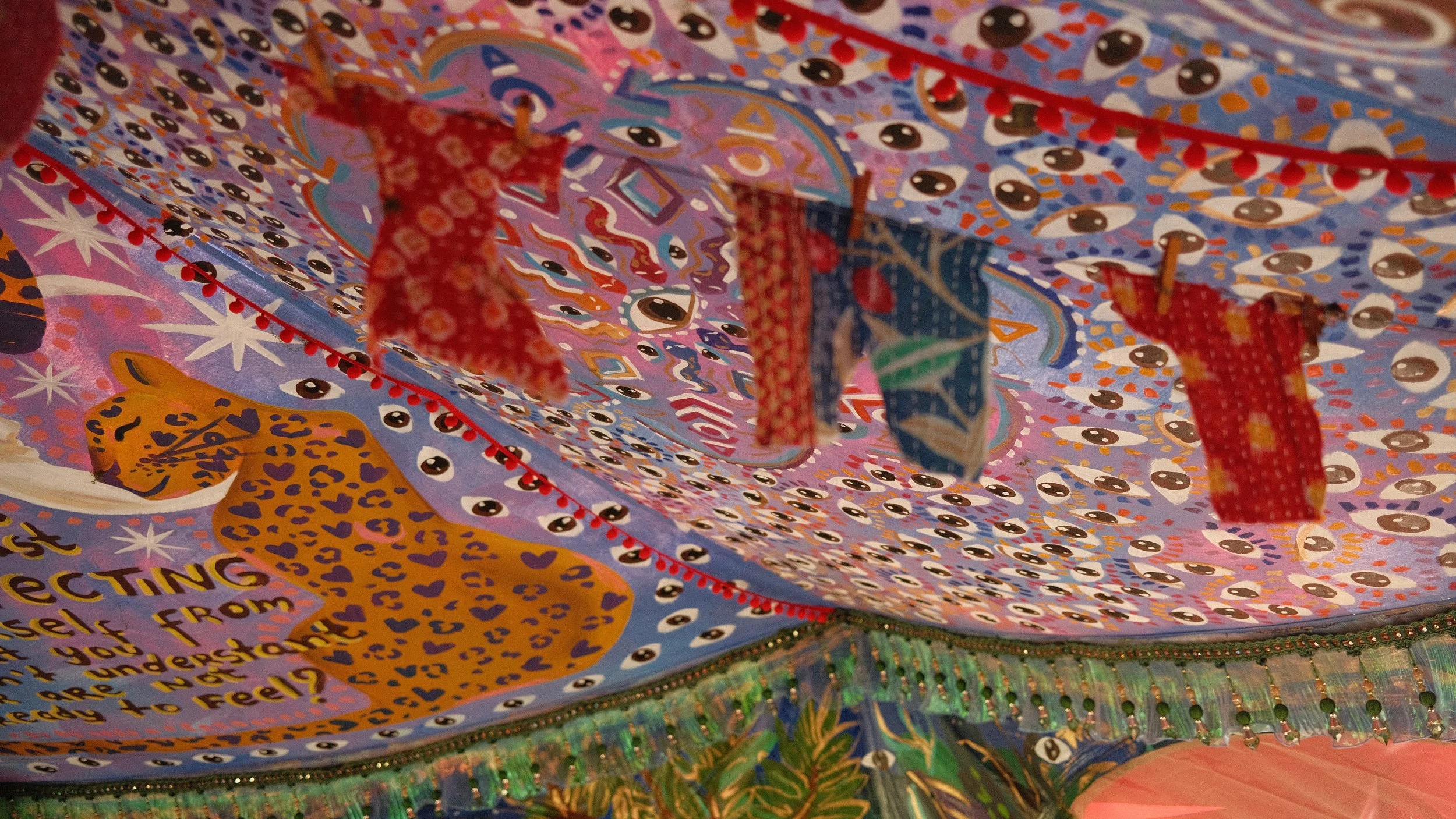
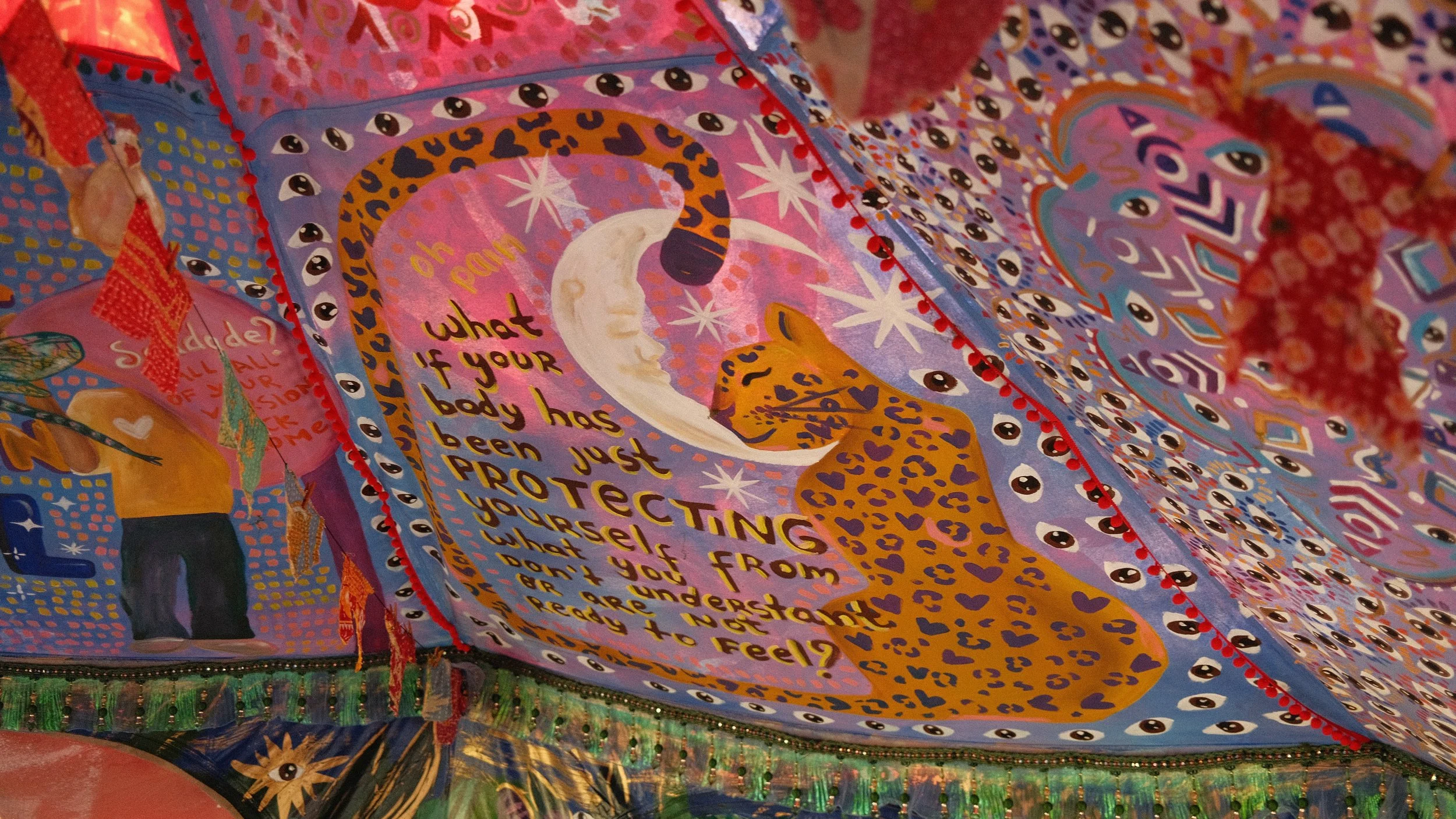
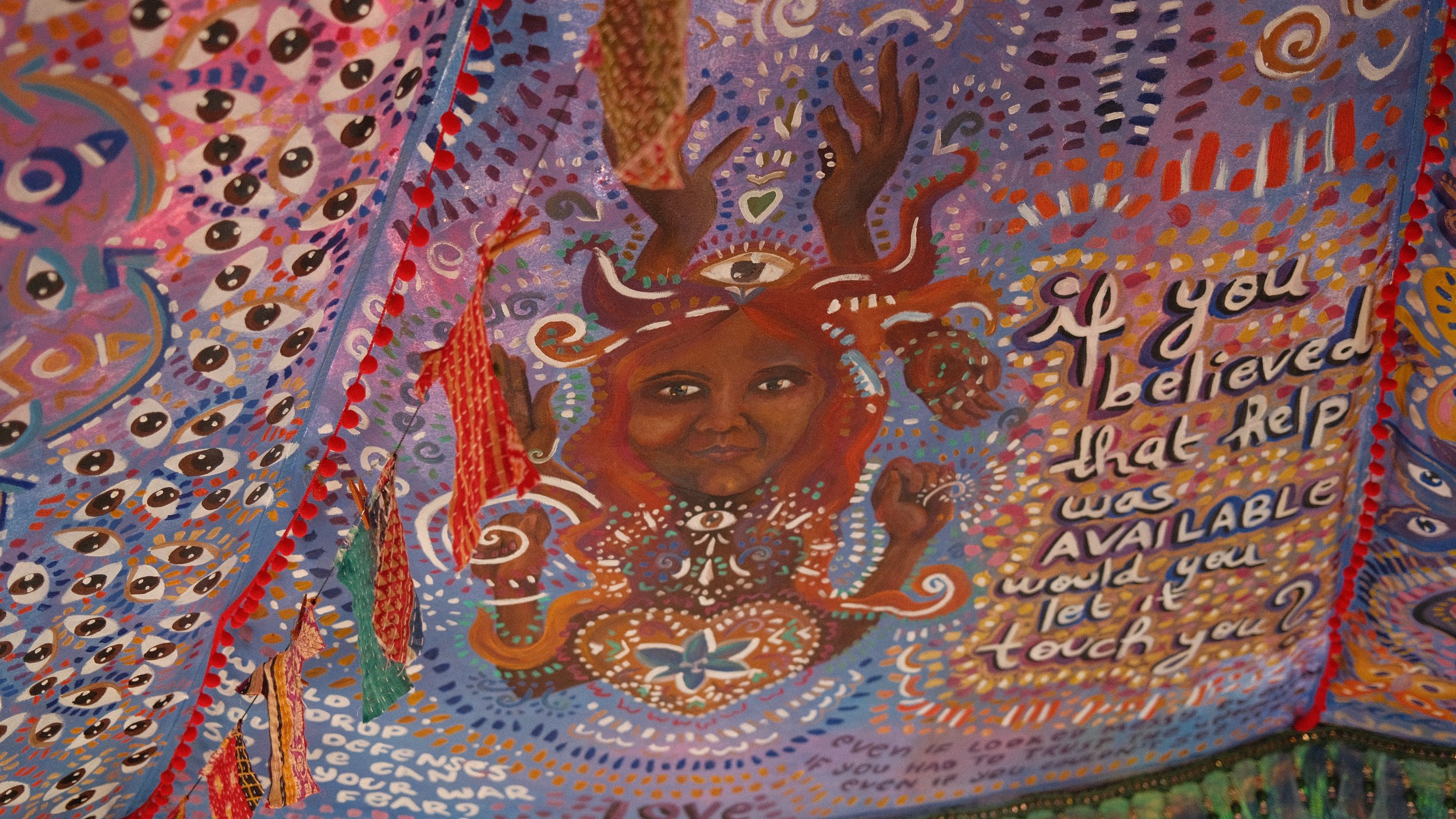
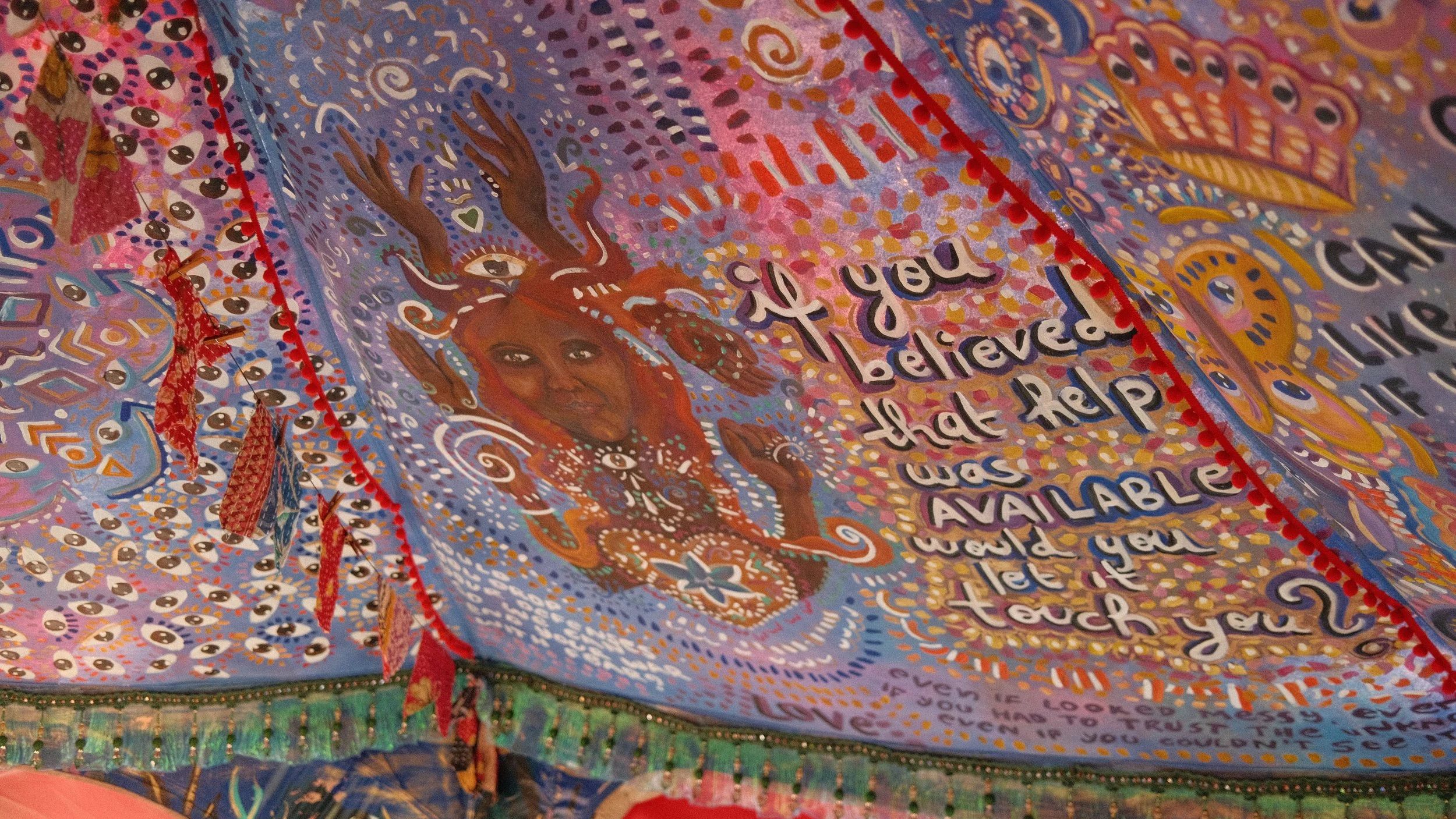
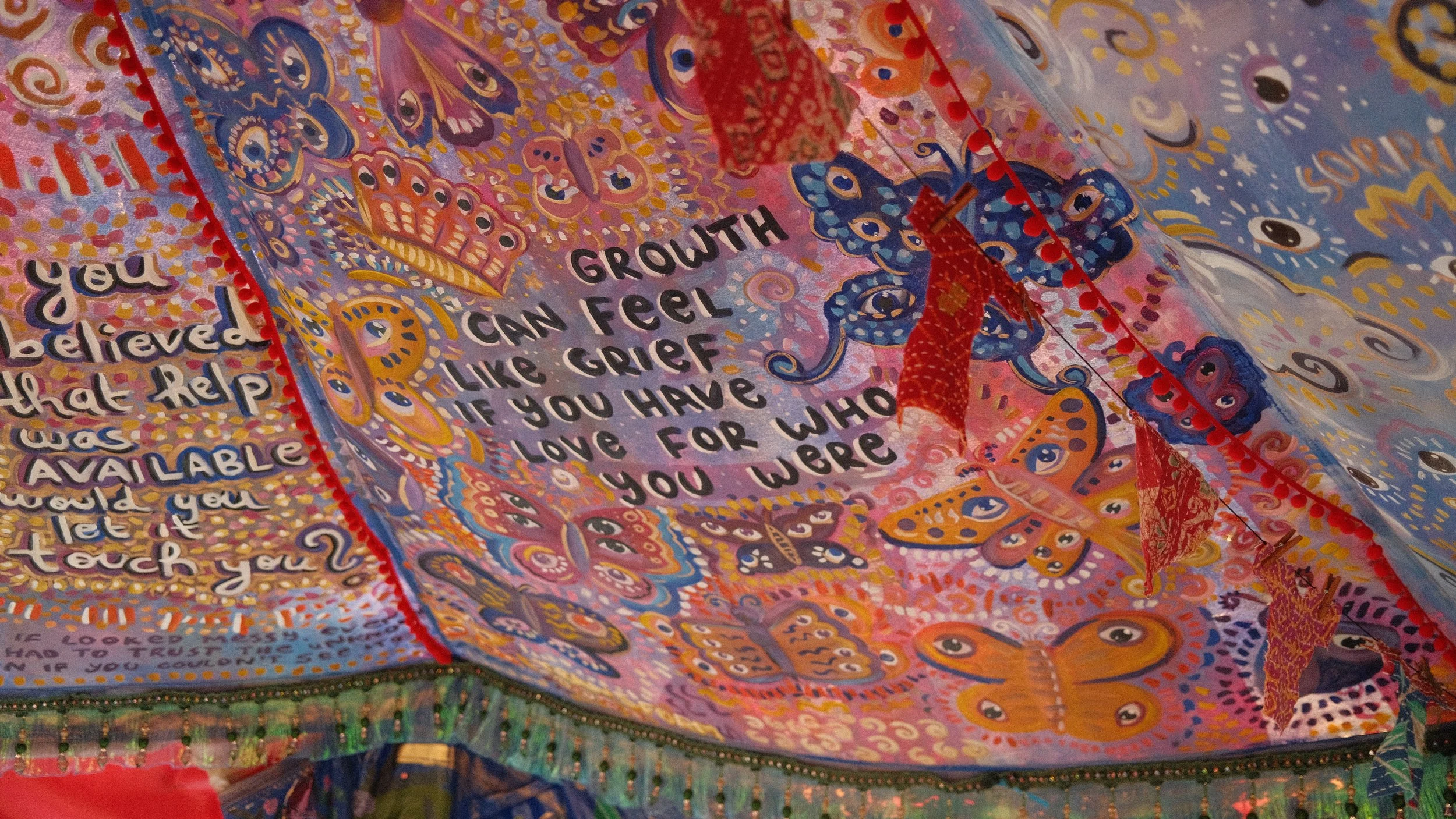
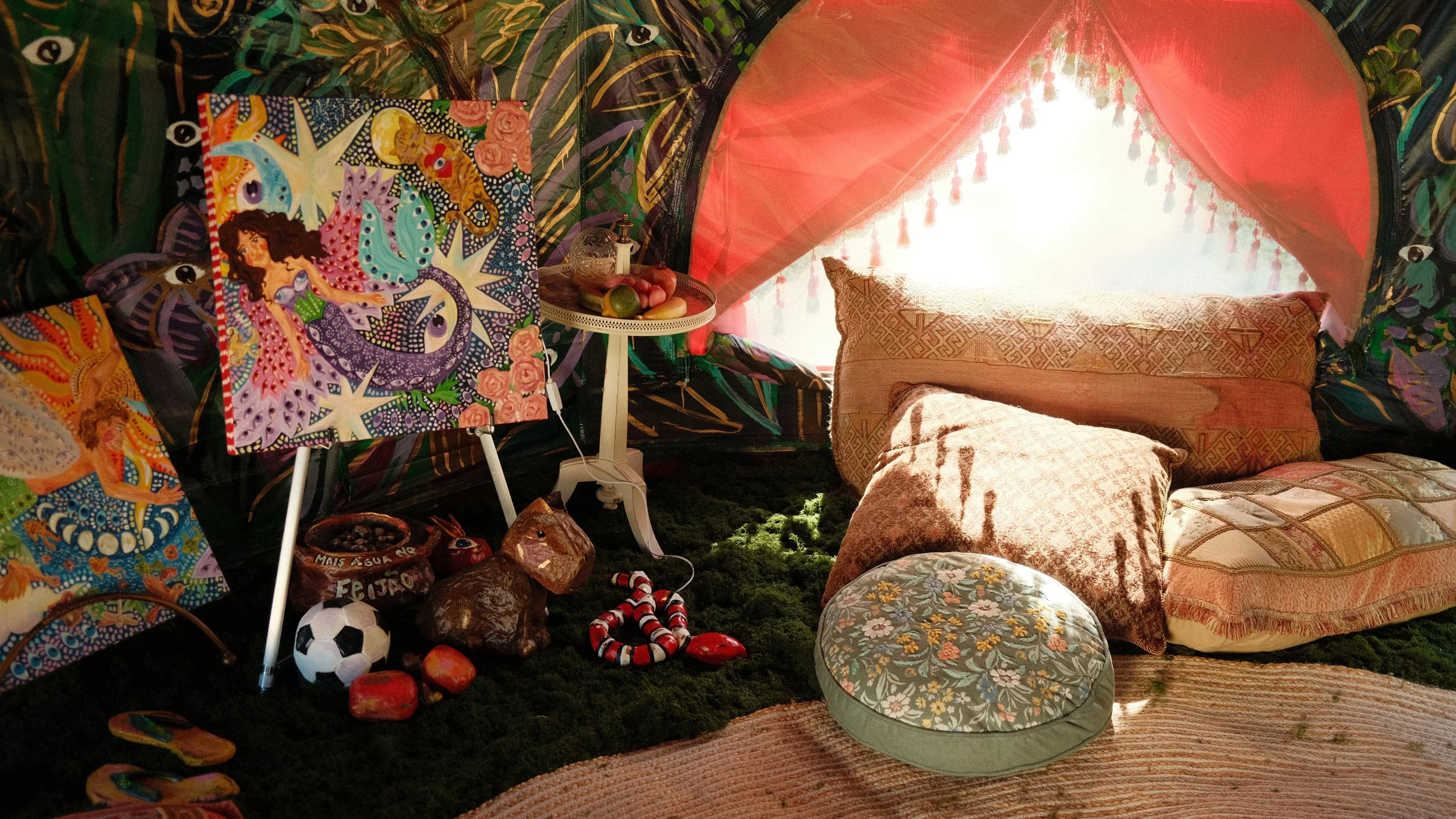
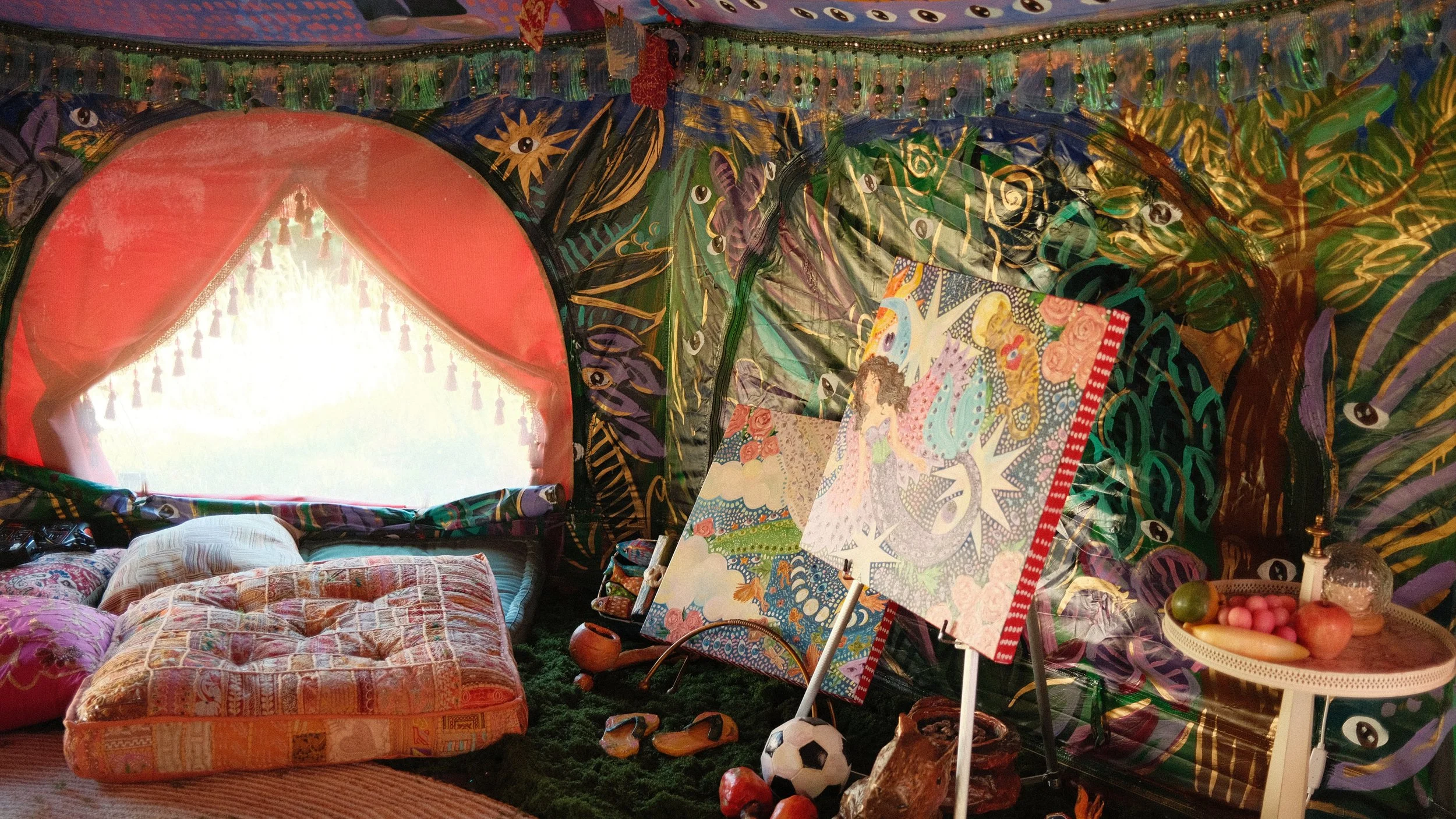
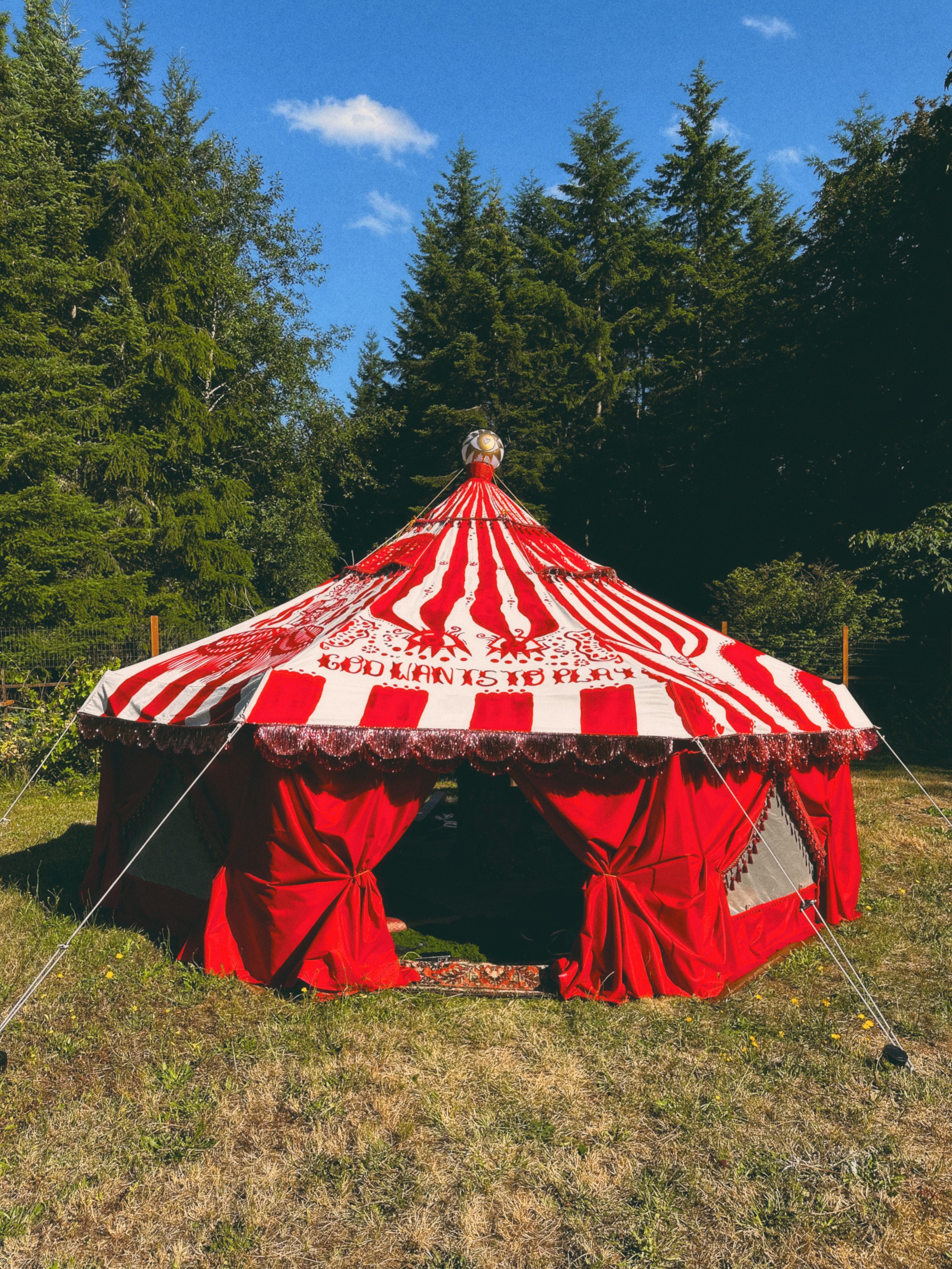
God Wants to Play is a walk-through spiral art installation that invites participants into a living, breathing body of work exploring identity, immigration, womanhood, spirituality, and Brazilian cultural symbolism.
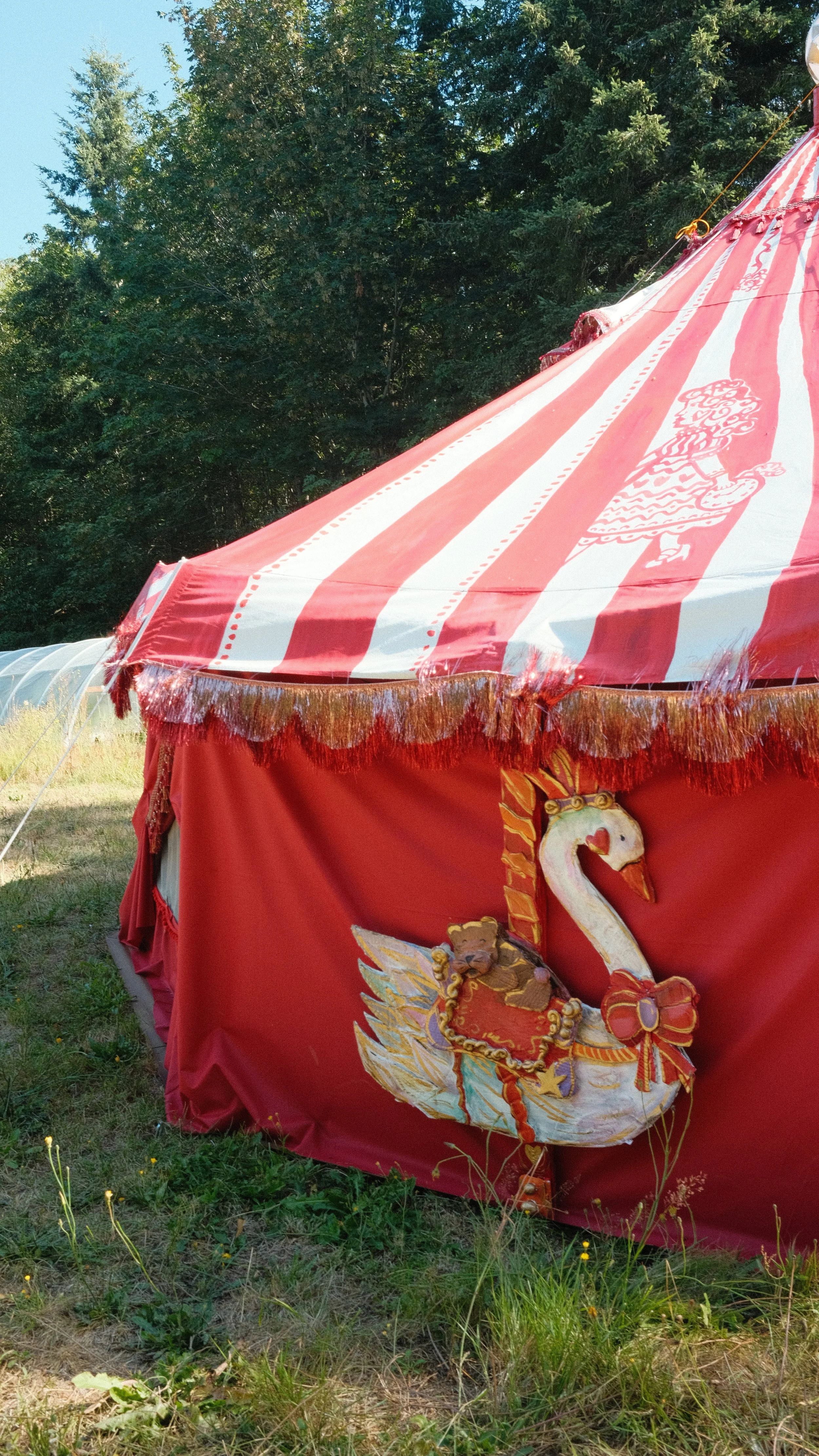
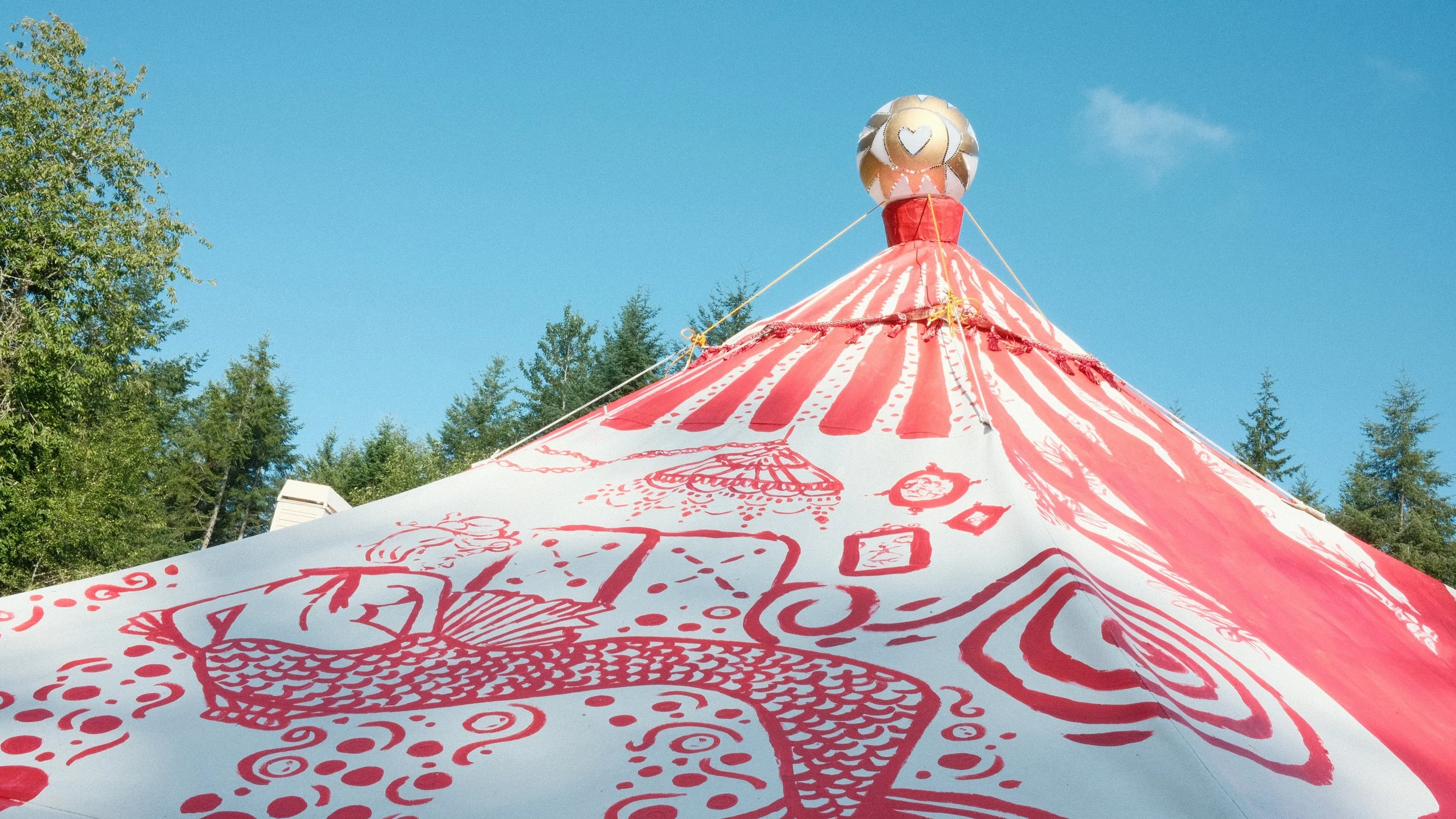
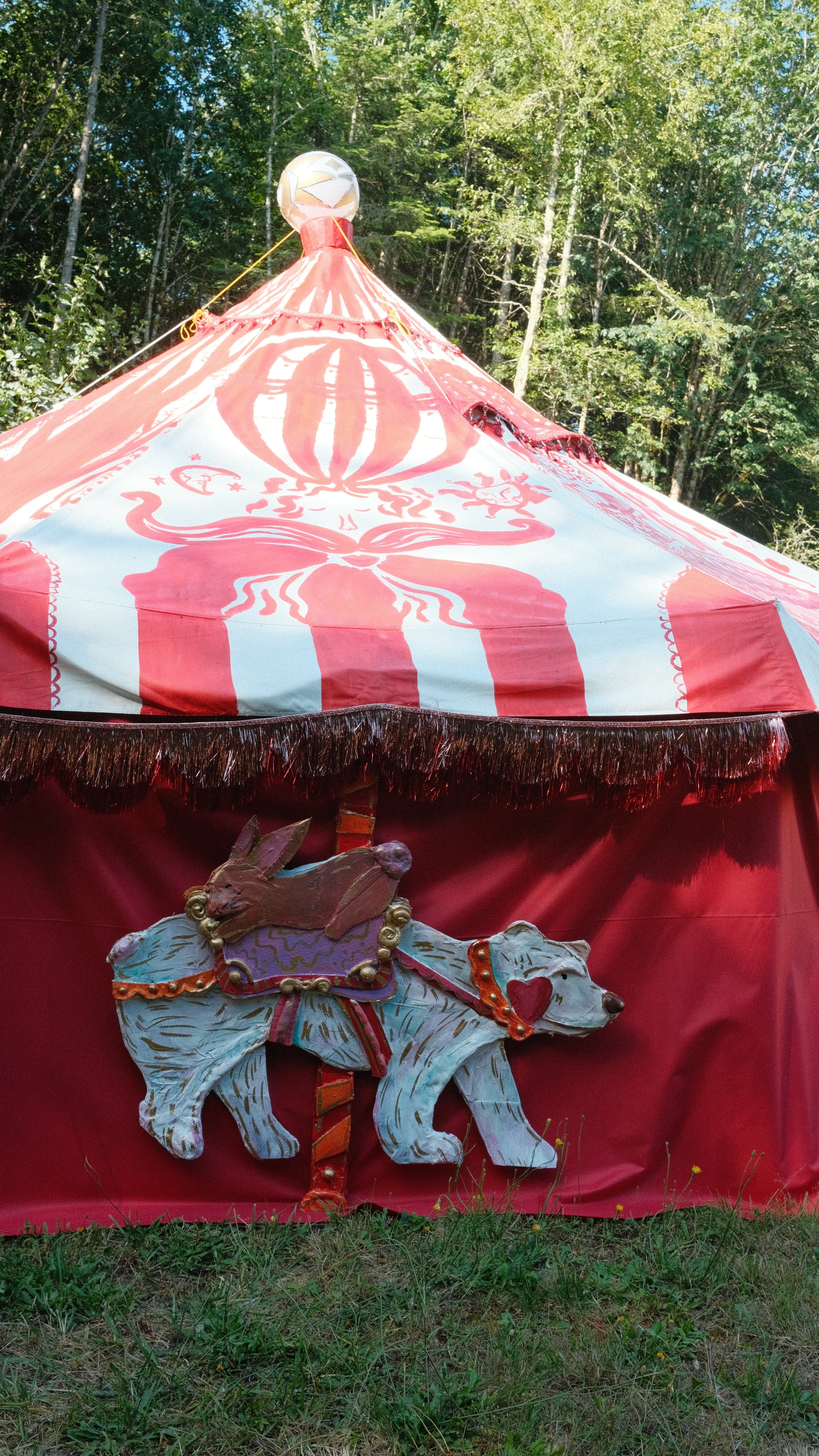
From the outside, the structure appears playful and carnivalesque. Once inside, the experience becomes intimate, reflective, and embodied.
The spiral path guides guests through large-scale paintings, sculptural elements, and interactive works that blur the line between art and action — inviting visitors not only to observe, but to participate.
The spiral movement symbolizes:
• Immigration as unfolding
• Identity as layered
• Art as initiation
• The body as architecture
And now, I am asking for your support to bring it to life. Your donation will help fund:
– Materials (fabric, structures, paint, natural elements)
– The installation space (tent, setup, transport)
– Labor and creation time
– Expanding the experience to reach more communities
Every contribution big or small directly supports this vision.
This is art as healing
This is art as remembrance
This is art as a path home
If this speaks to you, I invite you to support and be part of this journey.
Com muito amor,
Maira
There is a future that is already here today, in this moment.
What I hope to share through this project is what art has done for me.
I arrived in the United States at nineteen years old seeking refuge, carrying more than the luggage in my hands. Coming from Brazil, one of the first things that struck me was the scale of everything — the portions, the spaces, the feeling of abundance. In this country of the big, I encountered something new: the possibility of safety. That safety became fertile ground for a long journey of losing myself and slowly rediscovering the parts of me that still carried the imprint of where I came from.
More than a decade later, I can see that I also arrived with a richness of my own. When I did not know what to do with the experiences I carried, I turned to art. I learned to pray in colors.
Art became a language through which I could express what words often could not hold in English or in my mother language. Because of that, I continue to create. It feels almost as natural to me as breathing.
My path has included immigration challenges, mental health diagnoses, and many moments where resources were scarce, yet my wrist could not put the paintbrush down. This proposal represents an opportunity to continue that work to create and share it with the public.
Today I create from a place that feels different. Over time I have begun to embody a sense of home within myself. The entanglement of where I come from and where I chose to build my life has become the foundation of my artistic practice.
Brazil remains a source of warmth, color, and emotional richness in my work. The United States has provided the ground and structure where I have been able to build my life and artistic voice.
This project invites the public to walk through my journey that being spiritual, emotional, and bodily through visual art. It reflects both the limitations and the resilience that have shaped who I am today.
Thank you for taking the time to read these words written from the pulse of my heart. I hope that as you move through this proposal you can feel the care, gratitude, and love that guide my work.
THE FULL EXPERIENCE DESCRIPTION
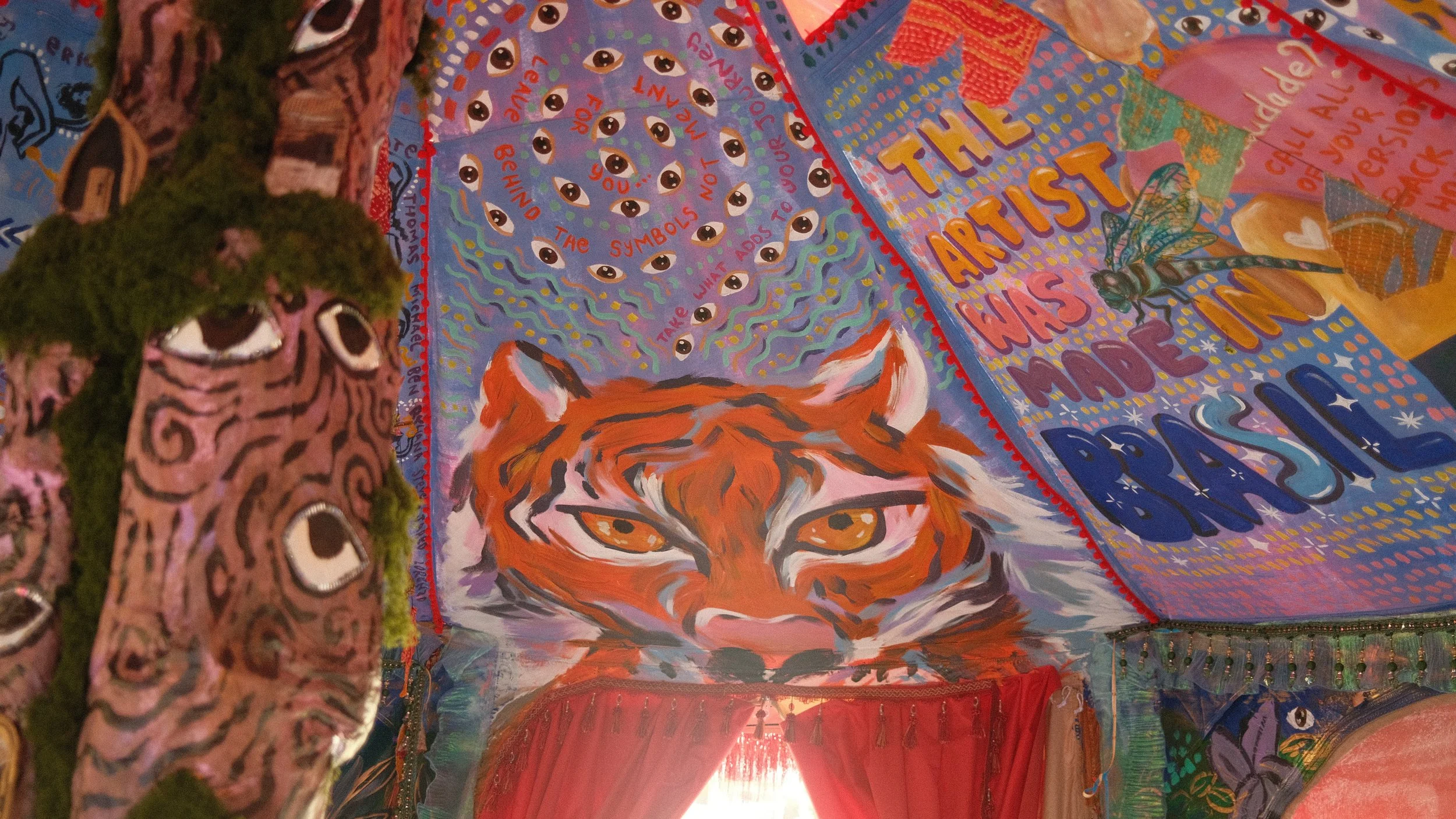
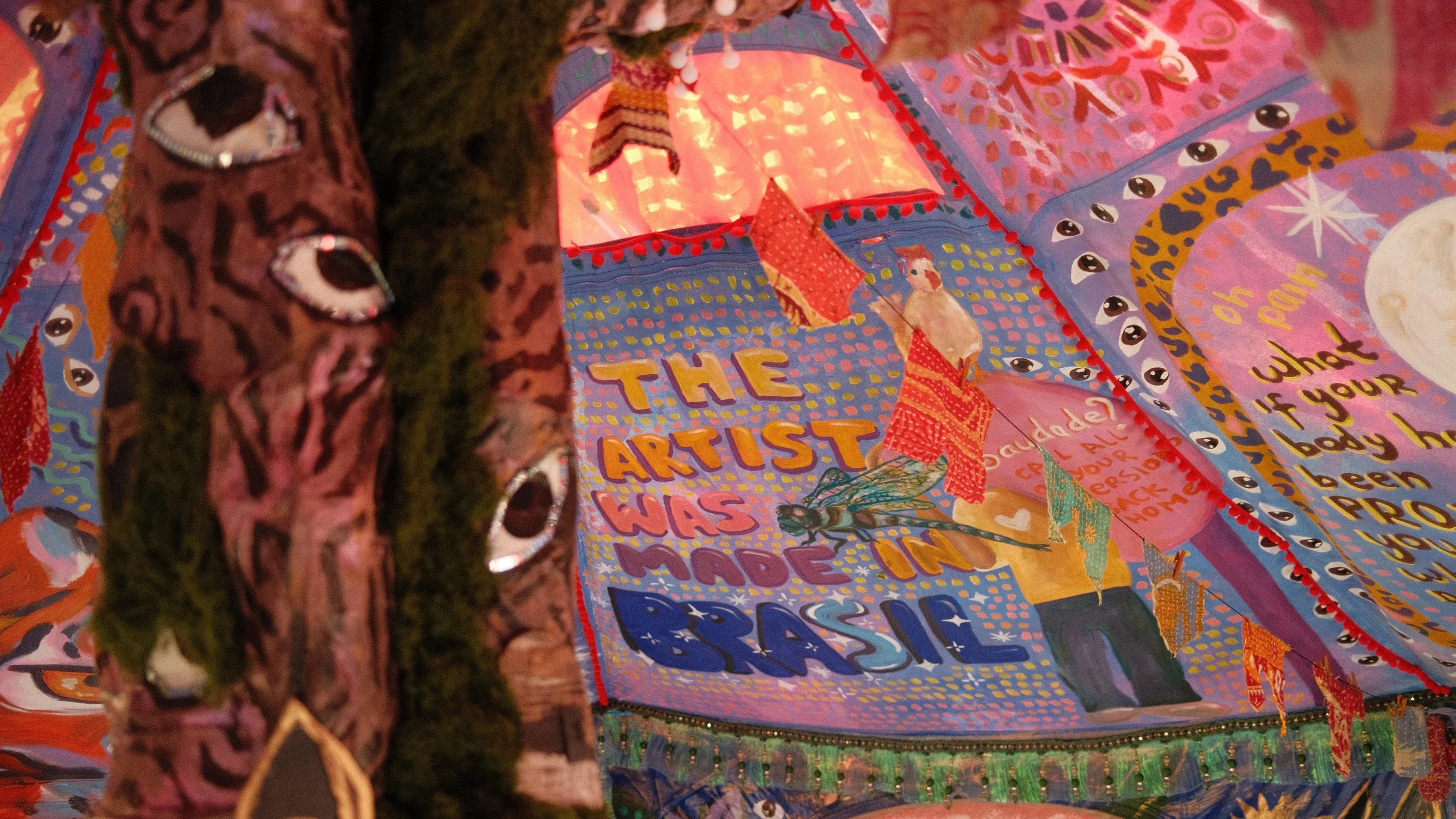
Guests enter through a circus-style threshold marked by the phrase:
“The Artist Was Made in Brazil.”
Participants are invited to move slowly through the space, encountering visual art, symbolic objects, and moments of reflection that transform the act of viewing art into a personal journey.
As they begin walking through the outer spiral, visitors encounter:
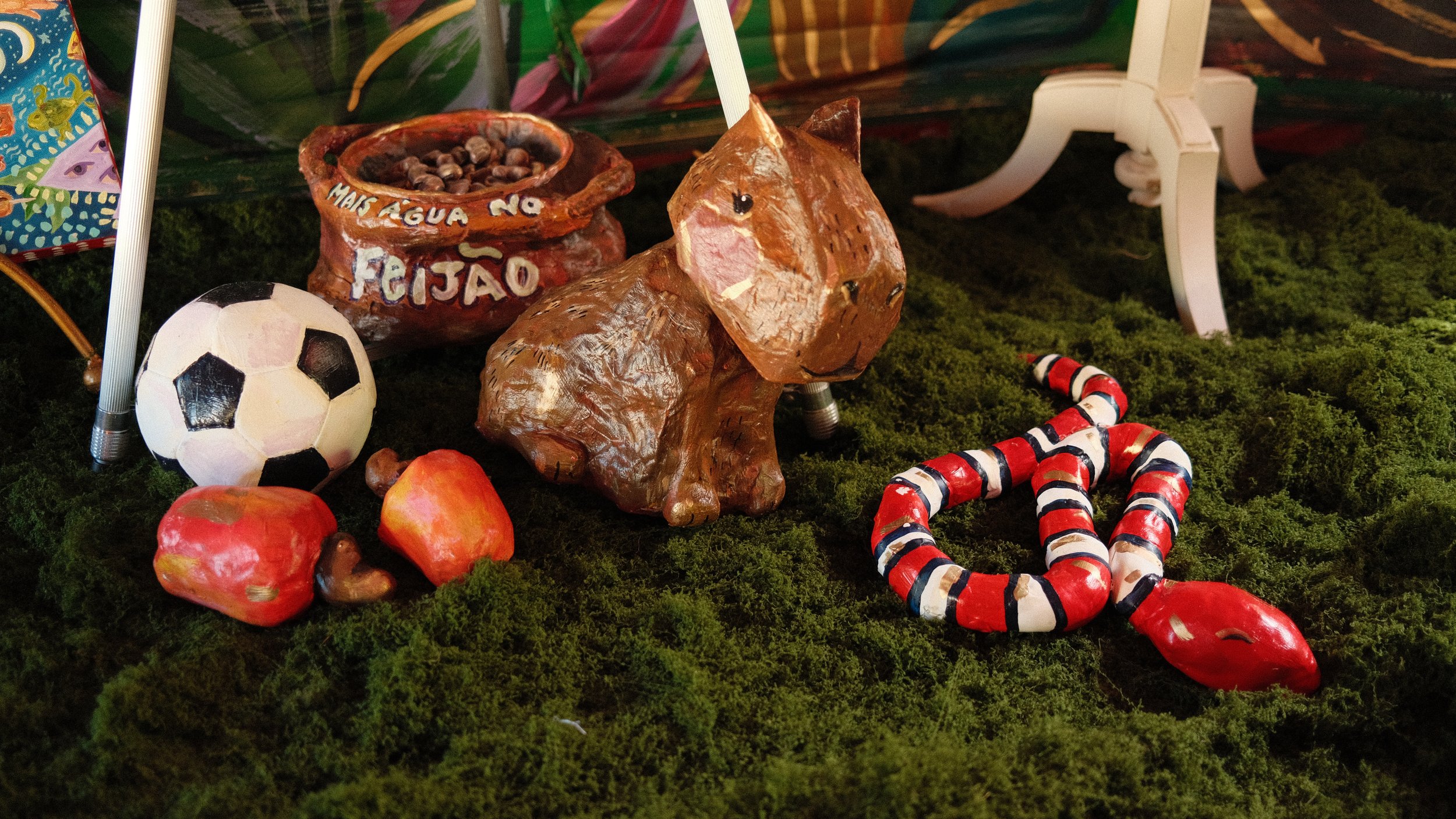
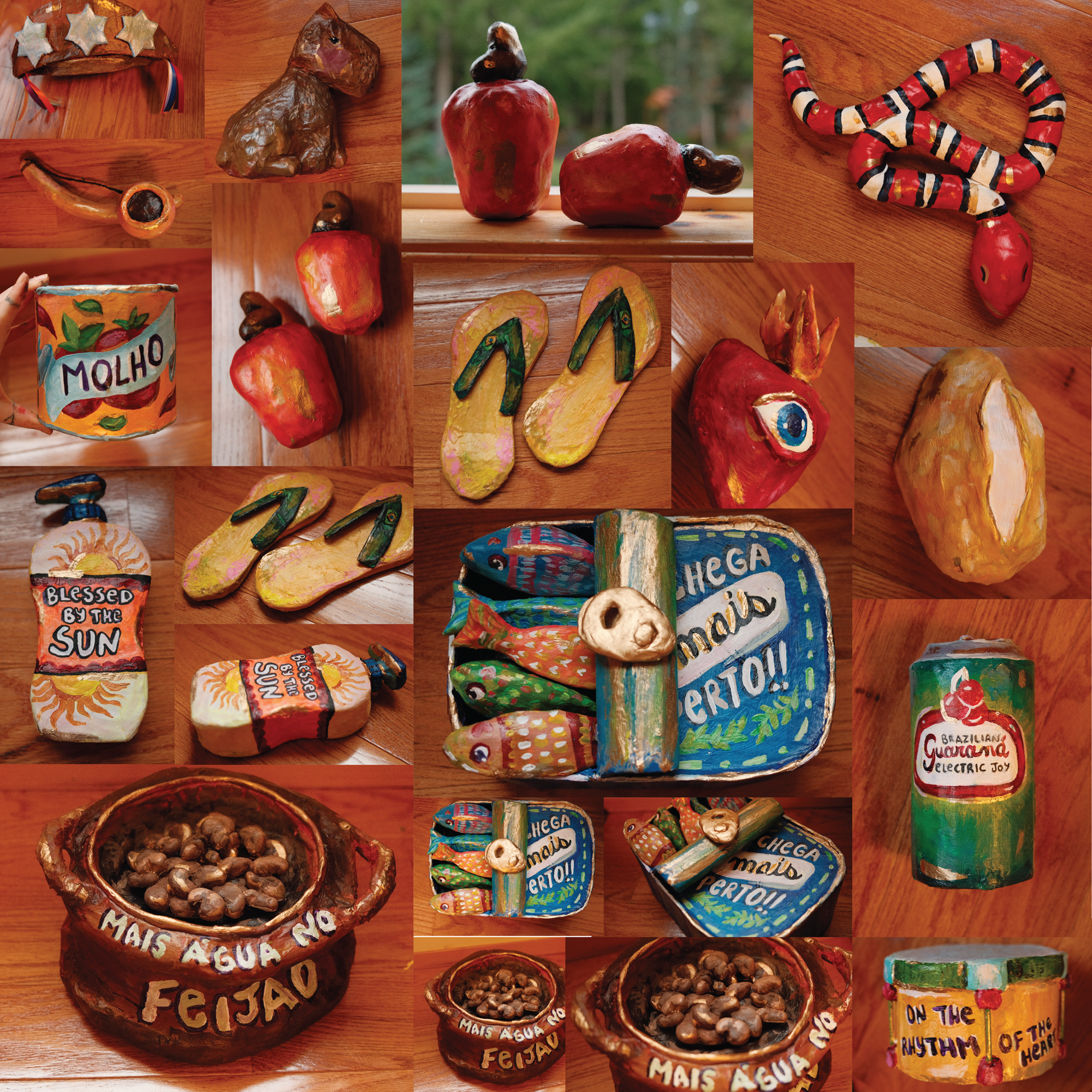
• A “Baggage” sculpture installation
A sculptural piece filled with symbolic objects representing Brazil and its rich cultural roots.
One of the elements is a pot of beans, referencing the Brazilian expression “mais água no feijão” literally, “add more water to the beans.” The phrase is commonly used when unexpected guests arrive for a meal, symbolizing generosity and the idea that there is always room for one more at the table.
Each sculptural element will be accompanied by small prints or written descriptions that help visitors understand the cultural symbolism and the intentions behind the work.
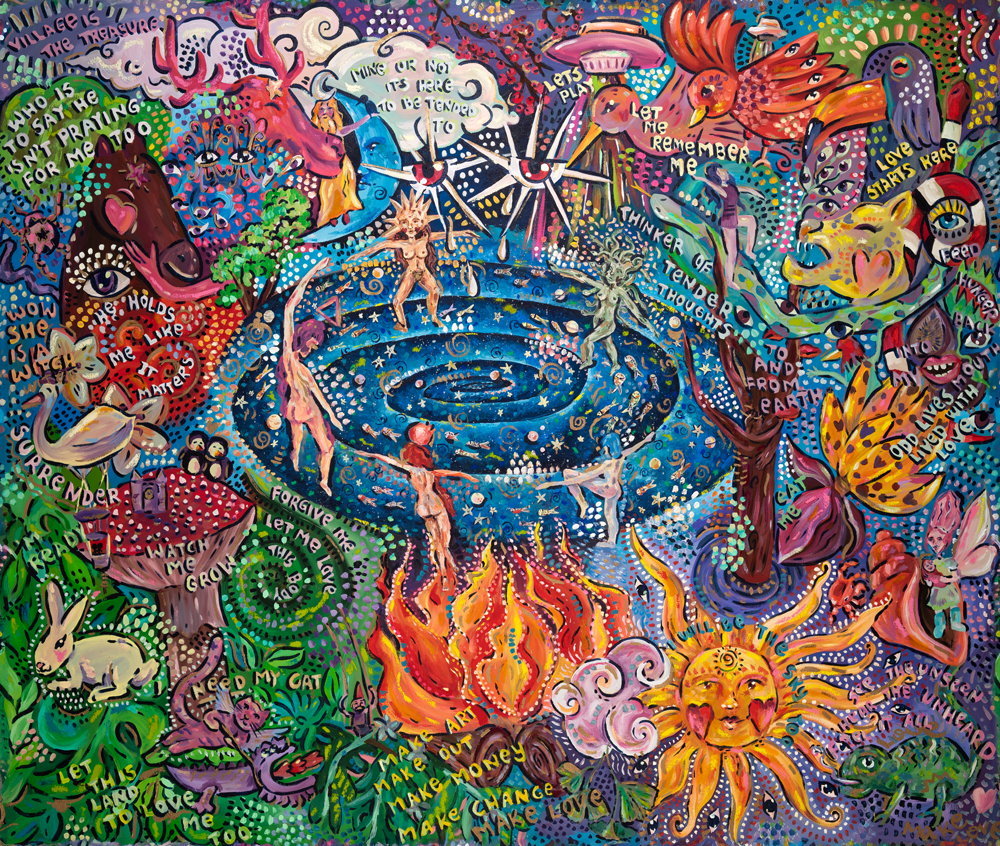
• A series of large-scale paintings
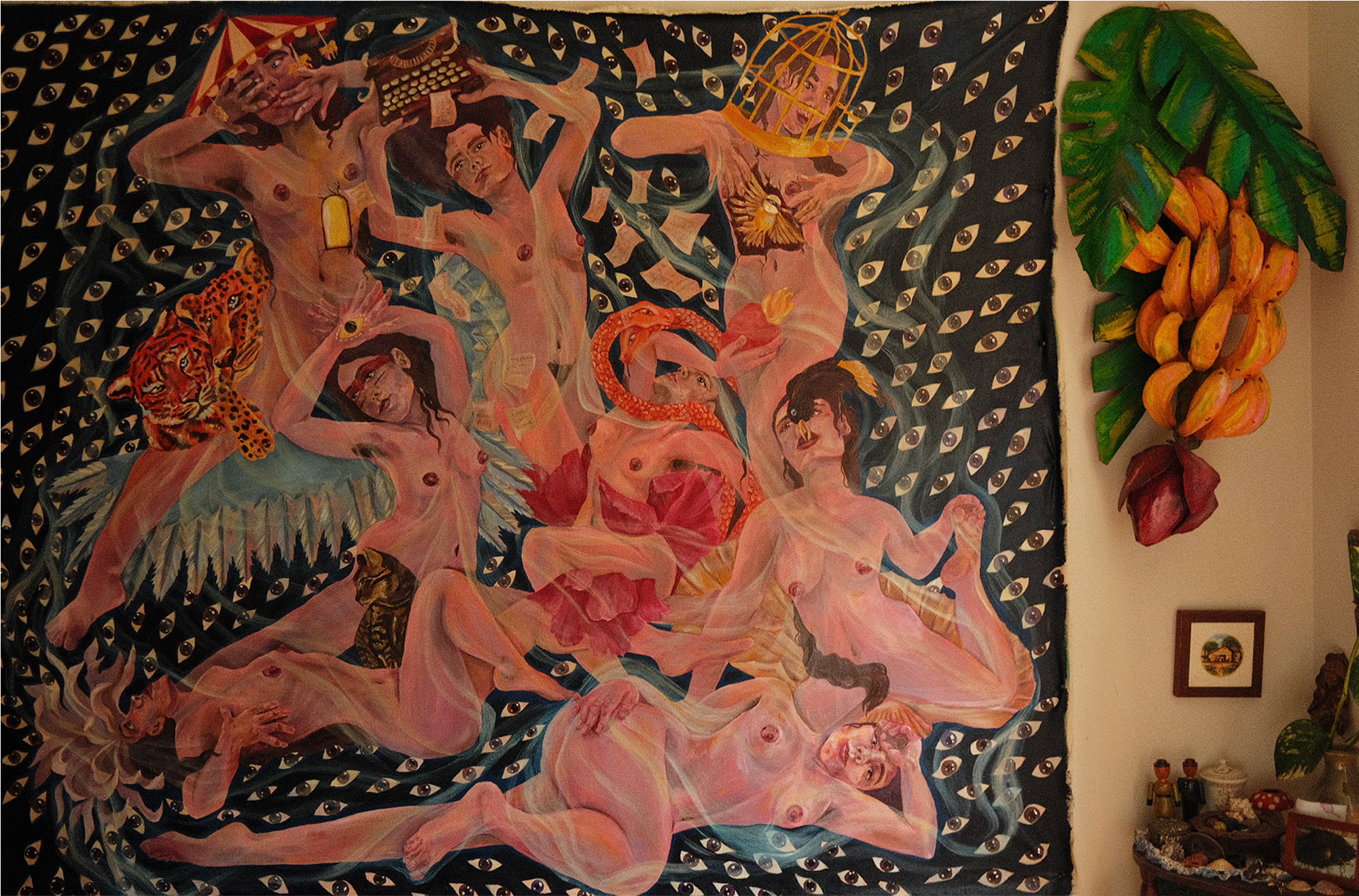
Visitors are introduced to paintings inspired by nature, divine union, spiritual embodiment, and the search for belonging. These works begin to open the emotional landscape of the installation and set the tone for the deeper journey inward.
Sculptural and Featured Works
• “Proceed With Love” Traffic Light Sculpture
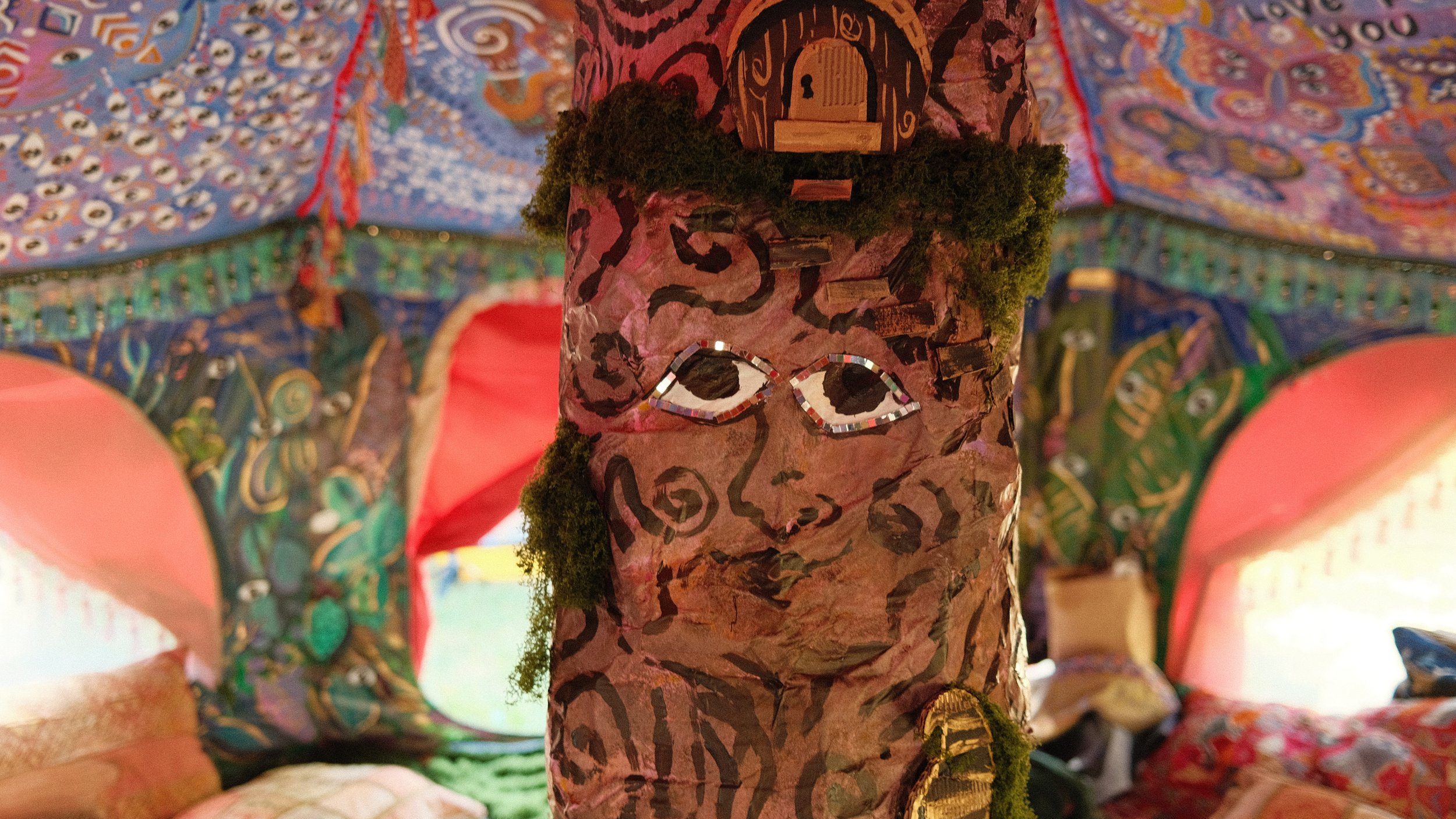
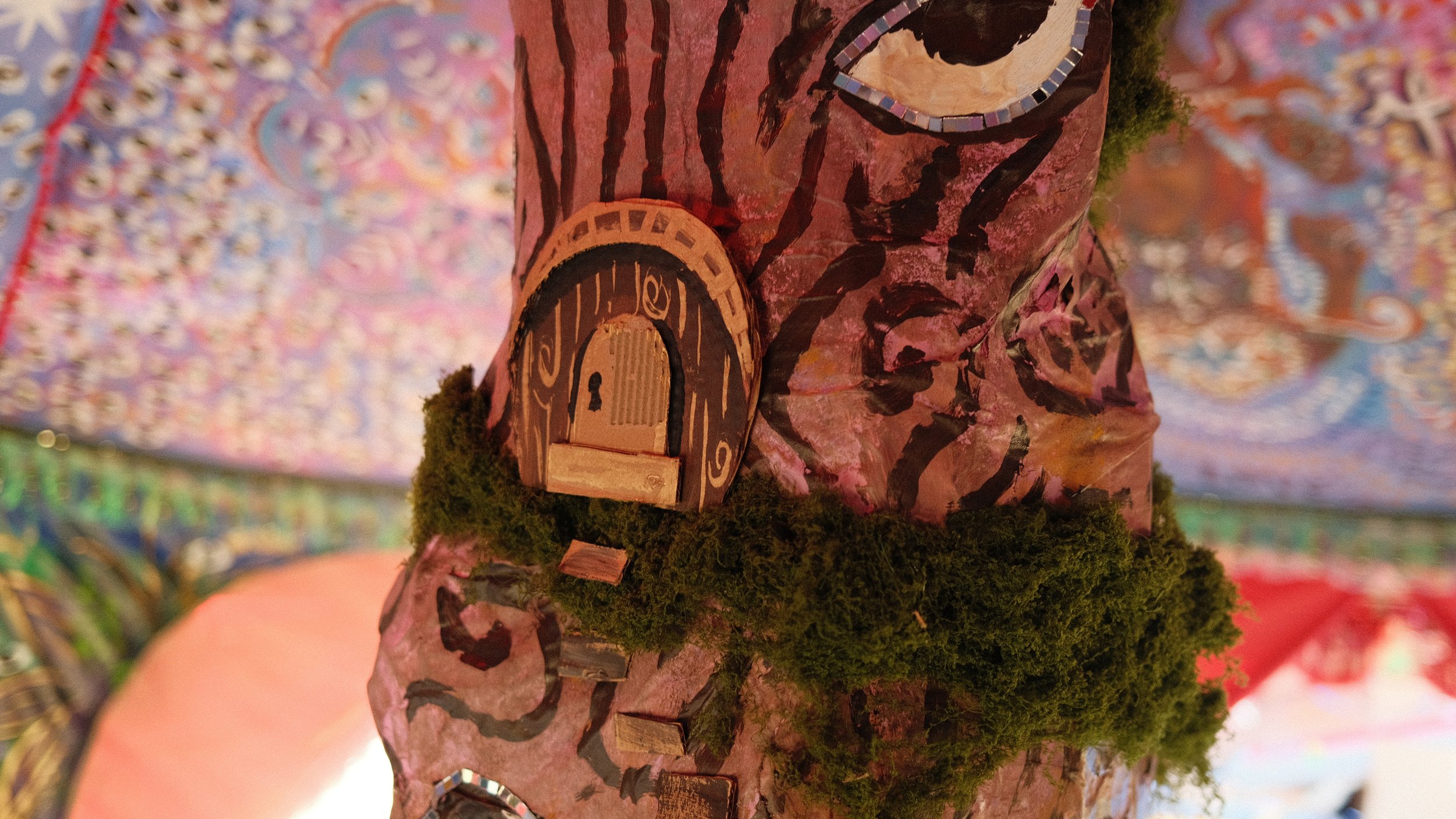
This sculpture features a reclaimed tree trunk holding small shrines and sacred spaces that honor the forces of nature. The trunk rises vertically, symbolizing growth and connection between earth and sky.
At the top, an interactive traffic light invites visitors to pause before continuing their journey through the installation.
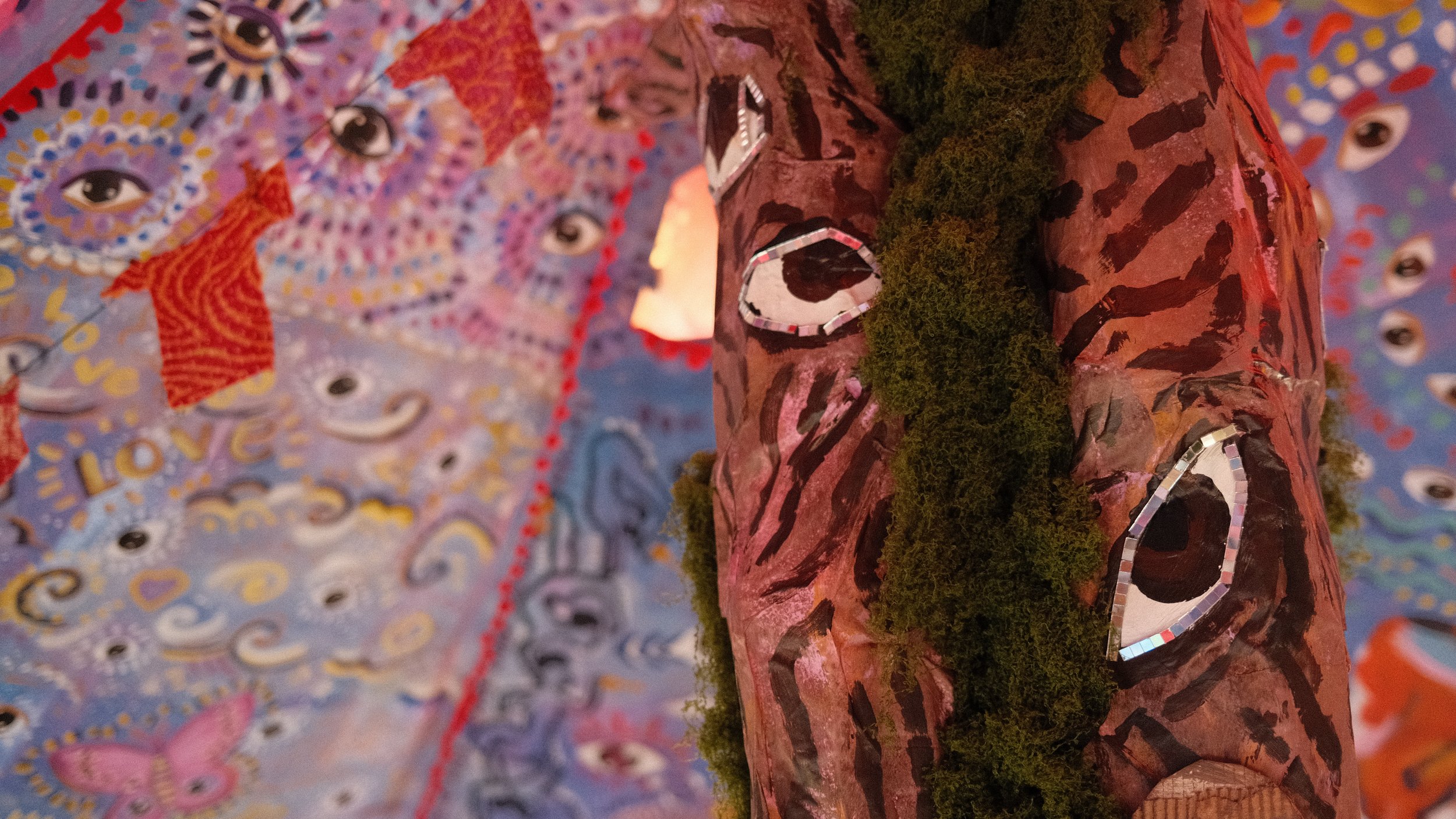
• Interactive “Tree Eyes” Sculpture
This sculpture creates a space for reflection on the wisdom of trees and their relationship to human growth.
Within this piece, visitors encounter written fragments and visual elements inspired by conversations with trees and the knowledge they hold — about branching outward, about resilience, and about how living beings continue to grow after trauma.
The sculpture invites participants to consider how consciousness expands through connection with the natural world. How do we honor the land that holds us?
The piece also references the story of Pau Brasil, the tree that gave Brazil its name — a tree known for the red dye it produces, often described as “bleeding.” The image becomes a metaphor for history, extraction, and the deep relationship between land, identity, and memory.
• 6 x 7 ft Painting — “Woman of Color”
This large-scale painting blends the symbolism of the Brazilian flag with the Washington State flag, reflecting the intersection of two lands that shape the artist’s life.
At the center stands a woman of color whose body becomes the meeting place of these two worlds a symbol of chosen home and embodied belonging.
This work invites visitors to reflect on questions of immigration and identity:
What does it mean to feel like a giant in a country of the big?
How do we embody all parts of ourselves and create a home where the land begins to recognize us?
As visitors continue walking through the spiral, they encounter seven large-scale paintings (6 x 7 ft) accompanied by poems and short reflections that deepen the emotional journey of the installation.
Each work represents a stage of transformation in the artist’s life and invites viewers to reflect on their own processes of belonging, healing, and becoming.
Featured paintings include:
“Being Held by Women”
A portrait of resurrection and community depicting women holding and supporting one another. The piece reflects the healing power of collective care and the role of women in guiding one another through transformation.
“Mirrors”
A portrait of ancient wisdom that explores the relationship between generations. The work reflects the moment when we recognize our elders as mirrors, carrying knowledge, memory, and guidance.
“Reclaiming”
A painting representing the seven energetic bodies and the initiations the artist experienced while stepping into a life guided by spirit and intuition.
“Prayer in Colors”
A vibrant work expressing manifestation, devotion, and the act of prayer through color and form.
Cultural Objects and Sculptural Elements
Throughout this section of the spiral, visitors will encounter everyday objects and sculptural works that reflect Brazilian and Latin cultural traditions.
• Traditional chairs and a table often found in Brazilian and Latin households, creating a familiar space of gathering and conversation.
• Portraits of family elders, presented with the message:
“Thank you to my ancestors.”
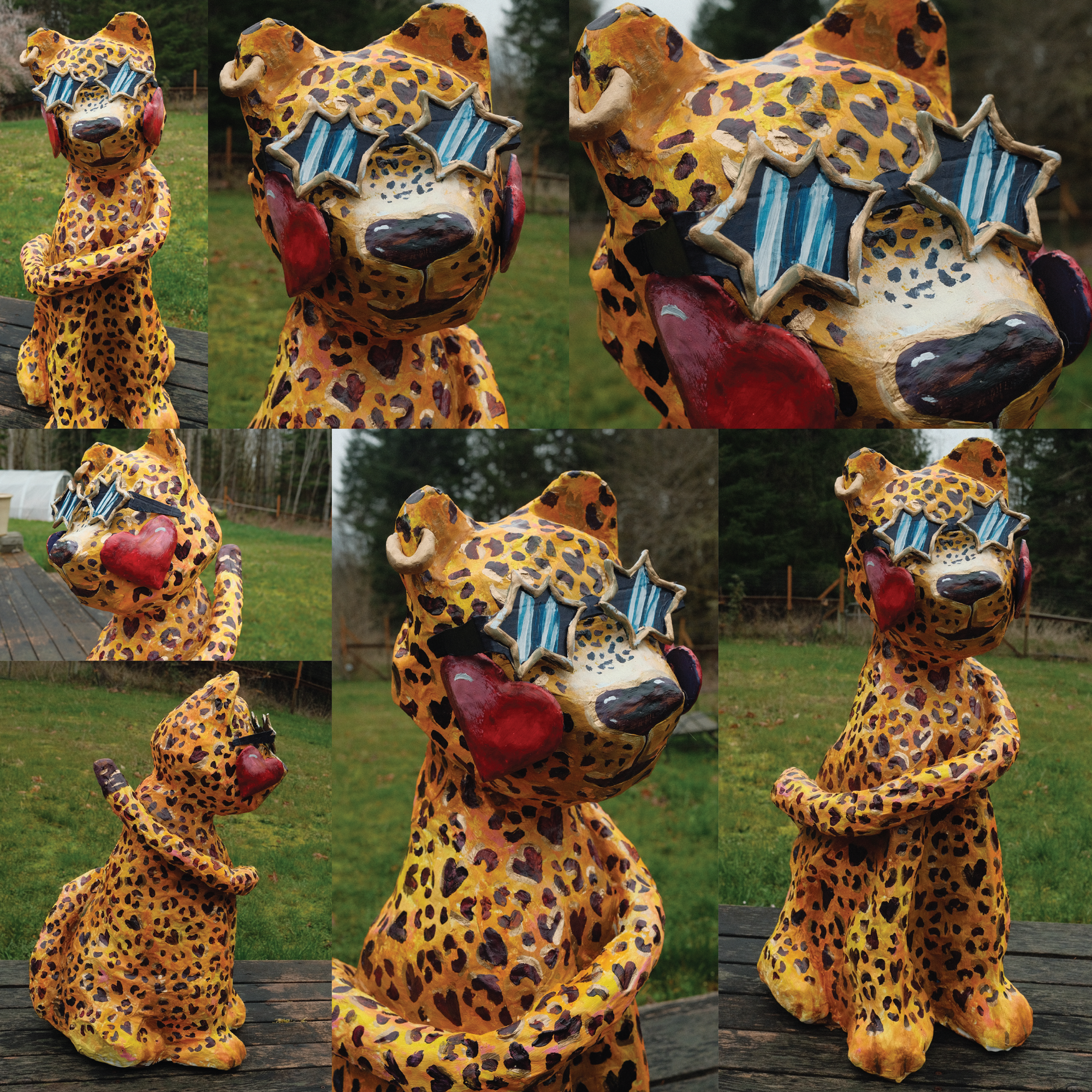
• A leopard sculpture holding a bowl of “Fitas do Bonfim.”
These colorful Brazilian prayer ribbons are traditionally tied with a wish or prayer.
• Sculptural banana trees, fruits, and natural elements that evoke the tropical landscapes and ecological richness of Brazil.
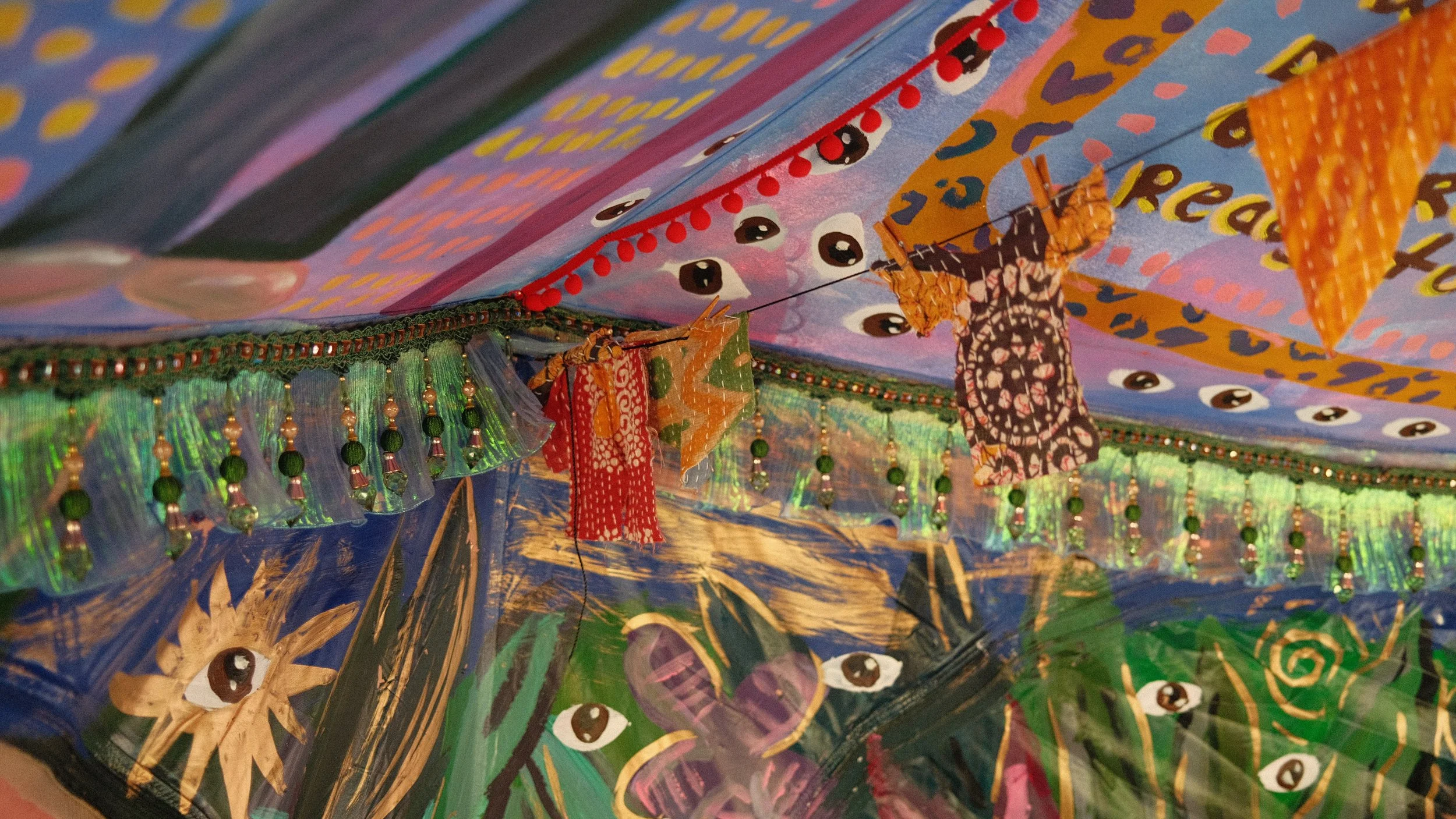
• A small clothing rack displaying wearable pieces made from the artwork, connecting the visual art to the artist’s history in textile and clothing design.
• A leopard sculpture holding a bowl of “Fitas do Bonfim.”
These colorful Brazilian prayer ribbons are traditionally tied with a wish or prayer.
• Sculptural banana trees, fruits, and natural elements that evoke the tropical landscapes and ecological richness of Brazil.
• A small clothing rack displaying wearable pieces made from the artwork, connecting the visual art to the artist’s history in textile and clothing design.
The Center: Returning Home
As the spiral journey comes to an end, visitors arrive at a moment of return — a call back home.
The final 6 x 7 ft painting, “Back Home,” depicts a body walking into its own body. The image symbolizes the process of returning to oneself after a long journey of transformation.
At the center of the spiral, this piece becomes a grounding point: a space of prayer, color, and rebirth.
Displayed alongside the work is the sentiment:
“Set the versions of yourself free.”
This message invites visitors to release past identities and honor the many selves that exist within a lifetime.
At the heart of the installation stands the final sculpture: a Brazilian public telephone, reimagined as a sound vessel for the space. The telephone will hold the music that accompanies the installation, so that as visitors walk through the spiral, they slowly move closer to the source of the sound.
The music becomes both guide and destination drawing participants inward until they arrive at the center.The spiral ends where it began: inside the body, where art, memory, and belonging meet.